Most of us picture a Confederate soldier rolling his possessions and gear up into a blanket when on the march, while Yankee soldiers had backpacks. But some who served in gray and butternut had state-of-the-art packs of their own, made by the British supplier S. Isaac, Campbell & Co. In this video, Curator of Education Joe Long shows how the backpack worked.
South Carolinian James C. Dozier was a lifelong soldier who reached the rank of lieutenant general and was known as "Mr. National Guard." But he is most honored for what he did as a young lieutenant in 1918, when he took out a German machine-gun nest with a .45 caliber pistol and some hand grenades. The pistol he used is on display at the S.C. Confederate Relic Room and Military Museum in Columbia. In this video, Fritz Hamer, the museum's curator of history and archivist, tells the story of how Dozier earned the Medal of Honor.
A century ago, the U.S. Army’s 30th Division served on the Western Front fighting under the direction of the British Army. The 30th was formed in 1917, made up primarily of South Carolina, North Carolina and Tennessee National Guard troops. They trained at Camp Sevier in Greenville, S.C., before being sent overseas to fight in World War I. “A Century Past: The 30th Division on the Western Front, 1918” was an exhibit at the S.C. Confederate Relic Room and Military Museum that tells the story of the division's experiences during the First World War.
Quick, what's the oldest military artifact on display at the South Carolina Confederate Relic Room and Military Museum? No, it's not from the 1860s. Remember, the museum covers ALL of our state's military history, going back to the Revolution. But that doesn't get there you there, either, because the oldest artifact is even older than that: It's a Japanese sword, a katana, that was made in about the year 1600, long before there was such a place as South Carolina!
Rare LeMat Revolver Added to Relic Room Collections
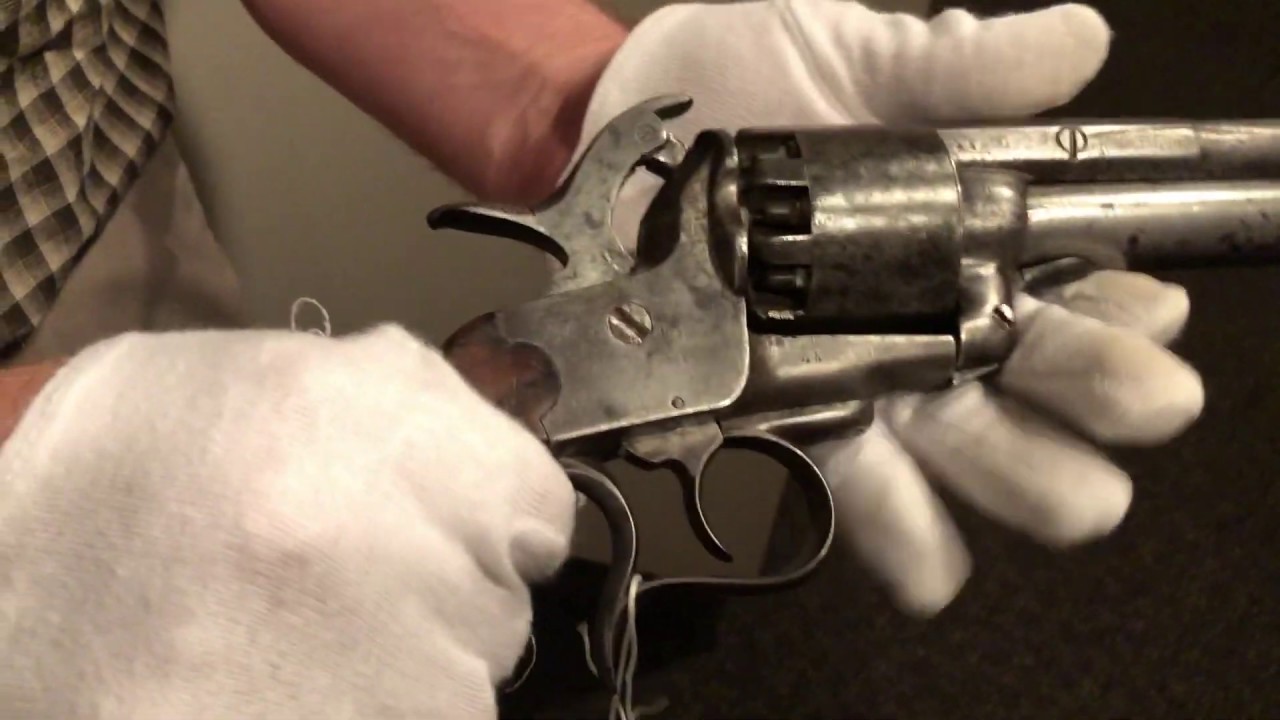
The LeMat Grape Shot Revolver is one of the most remarkable firearms ever produced at any time. It featured a cylinder with not six, but nine .42-caliber bullets, and a separate 18-gauge barrel made to fire buckshot. This put tremendous firepower into the hand of cavalry leader J.E.B. Stuart and others who carried it through the Civil War. In this video, Curator of Education Joe Long talks about the two LeMats the South Carolina Confederate Relic Room and Military Museum has in its collections, one example each from the first and second generations of the weapon.
Everyone has heard that the Confederacy was at a disadvantage when it came to producing its own war materiel, but there were some exceptions to this rule. The Morse breech-loading carbine was an ingenious weapon manufactured in Greenville, SC, late in the war. Here, Joe Long, curator of education, displays a Morse carbine and explains what made it special.
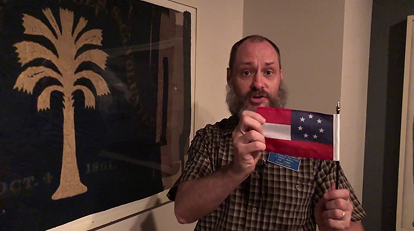
Curator of Education Joe Long talks about the regimental flag of the 1st South Carolina Rifle Regiment, also known as Orr's Rifles. It was formed by James Lawrence Orr in July 1861, and the next year became a part of Robert E. Lee's Army of Northern Virginia. Its distinctive interpretation of a Palmetto tree helped inspire the Relic Room's new logo.
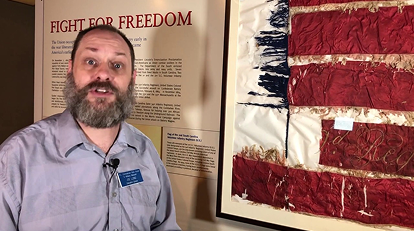
A movie about Harriet Tubman and her heroic fight against slavery is in the theaters. Meanwhile we have a Tubman-related artifact, perhaps the only one in South Carolina, at the Relic Room. It's a tattered regimental flag of the unit that she guided on the Combahee River Raid, which freed about 800 slaves. Here, our own Joe Long tells the story.